
Credit report parsing converts multi-page bureau PDFs into structured, LOS-ready fields, tradeline arrays, and page-level citations that underwriting engines can consume directly. The output still needs validation rules and an exception queue before anything gets written back into a loan file. There are solutions available that belong in this category. The right next step: run a small-batch pilot against files you already know inside out, then measure accuracy before scaling.
TL;DR:
- Parsers produce structured, labeled data with page-level citations, enabling faster validation and reducing manual retyping, especially for high-impact fields.
- Accurate mapping, validation, and exception handling before go-live significantly lower error rates, with pilot testing on key fields like income and public records.
- Validation rules based on format, range, and confidence thresholds are crucial to prevent incorrect data from entering the loan file and ensure regulatory compliance.
- Pilot programs should track field accuracy, exception rates, and time savings across 20 to 30 representative files before expanding coverage or automating LOS write-backs.
- Vendors should provide clear information on data residency, error rates, and explainability, as well as support change management for staff retraining in reviewing AI outputs.
Table of Contents
- What Parsed Credit-Report Output Actually Looks Like
- How Parsing Fits Into Underwriting and LOS Workflows
- How Do You Pilot Credit Report Parsing Before Full Rollout?
- What Validation Rules Actually Protect You
- What ROI Should You Actually Expect?
- Governance, Vendor Diligence, and Where Humans Stay in Charge
- Why the Real Risk Isn't the Parser, It's the Rollout
- Autowrite Handles Parsing, Validation, and LOS Sync in One Pass
- Sources
- FAQ
What Parsed Credit-Report Output Actually Looks Like
A parser worth trusting hands back more than a wall of text. It returns discrete, labeled fields: borrower identity data, report pull date, credit score with the scoring model attached, arrays of tradelines (creditor, balance, limit, payment history, status codes), inquiry records, and public records like judgments or bankruptcies.
Format matters as much as content. Structured output typically arrives as JSON, normalized tables, or CSV exports built specifically to map into loan origination system (LOS) fields without a human retyping anything. The best systems also attach page-coordinate citations to each value, so a reviewer can click a field and see exactly where on the original PDF it came from. That traceability, described in LlamaIndex's mortgage credit report OCR documentation, cuts down on the guesswork that turns quality control into a second full read of the report.
Tri-merge reports complicate this further. Each bureau formats tradelines and status codes differently, and a parser has to preserve which bureau reported what rather than flattening everything into one generic record. Sensible's credit report extraction guidance notes that normalizing bureau-specific codes into a consistent schema is what lets downstream underwriting logic treat Equifax and TransUnion data correctly instead of mixing them.
Core fields you should expect in any competent output:
- Borrower identity and report metadata (pull date, bureau, report type)
- Credit score value and the scoring model used to generate it
- Full tradeline array with balances, limits, and 24+ month payment history
- Inquiries, with date and creditor
- Public records and collections, flagged separately from standard tradelines
How Parsing Fits Into Underwriting and LOS Workflows
Extracted fields are only useful once they land in the right place inside your loan origination system, and that mapping step is where most manual efforts break down. Common mapping errors include matching a bureau-specific status code to the wrong LOS field, dropping decimal precision on balances, or overwriting an existing manually entered value without a record of the change.
The safer pattern treats write-back as one-way from the credit report into a staging layer, not directly into disclosures. An orchestration layer sits between the parser and the LOS, running validation checks and holding anything that fails a rule in an exception queue before it ever touches a live file. US Tech Automations' guidance on mortgage data entry automation frames this as a capture, validate, sync sequence: extraction without validation just creates wrong data faster instead of slower.
Practical mapping steps worth locking down before go-live:
- Map each parsed field to its exact LOS destination field, not a close approximation
- Log every write-back event with a timestamp and source document reference
- Route mismatches (a balance that changed between two pulls, for instance) to a reviewer instead of auto-overwriting
- Confirm downstream disclosures pull from the validated staging layer, not directly from raw parser output
A well-built mortgage document automation workflow treats this mapping layer as infrastructure, not an afterthought bolted on after the parser ships.
How Do You Pilot Credit Report Parsing Before Full Rollout?
Skipping straight to full deployment is how brokerages end up with a fast way to generate bad data. A structured pilot catches that before it costs you a file.
- Select 20 to 30 representative files that span your typical borrower mix, including a few with unusual tradeline structures or public records.
- Run the parser on all files and capture the raw structured output alongside the original PDFs.
- Compare parsed fields against a human reviewer's manual read, field by field, not just spot-checking totals.
- Score field-level accuracy separately for high-stakes fields (income-related tradelines, balances, public records) versus lower-risk metadata.
- Track the exception rate, meaning the share of fields the system flags as low-confidence rather than auto-populating.
- Measure time saved per file compared to your current manual entry baseline.
- Confirm LOS write-back success rate by checking how many validated fields actually landed correctly without a second manual correction.
Pro Tip: Start your pilot with the fields most likely to break a deal, income tradelines and public records, before expanding into lower-risk metadata like inquiry dates. US Tech Automations recommends this sequencing because validation logic proven on high-impact fields tends to generalize well once you add the rest.
Brokerages that shift from manual entry to structured automation commonly cut admin hours from 20 to 30 down to 5 to 8 hours a week per broker, while scaling files handled per broker from roughly 6 to 8 up to 12 to 15 a month. Use your pilot's numbers, not those figures, as your actual go/no-go threshold. Once accuracy holds steady across two pilot rounds, expand field coverage gradually and train administrators on reviewing exceptions before you add volume.
What Validation Rules Actually Protect You
Parsing output is only as trustworthy as the checks sitting behind it, and skipping this layer is the single most common way brokerages turn automation into a liability instead of an asset.
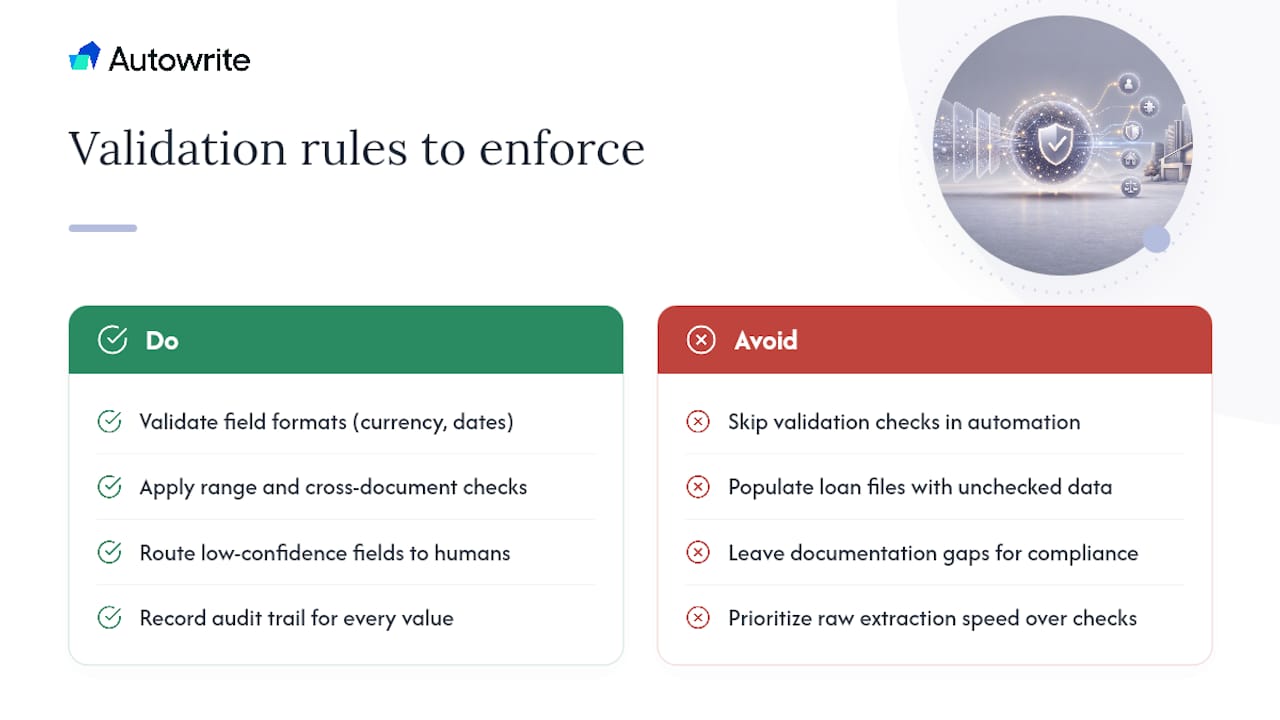
Field-level checks come first: format validation (does a balance actually look like currency, does a date fall in a plausible range), range checks (is a credit score between 300 and 900), and cross-document consistency (does the borrower name on the credit report match the application). Confidence thresholds matter just as much. Any field the parser flags below your set threshold, whether that's a smudged digit or a table row that didn't stitch together cleanly, should route automatically to a human reviewer rather than populate the loan file unchecked. LlamaIndex's extraction research points to table stitching errors and digit misreads as the most common failure points, which is exactly why an auto-correction loop paired with a low-confidence flag matters more than raw extraction speed.
Audit trail requirements aren't optional in a regulated file. Every extracted value needs a page coordinate reference, a timestamp, the reviewer ID if a human touched it, and a written justification for any manual override. This ties directly into broader anti-money laundering mortgage compliance obligations, where documentation gaps create far more exposure than a slow file ever does.
What ROI Should You Actually Expect?
Set your expectations with ranges, not promises. Brokerages moving from manual credit report entry to structured parsing have reported admin time dropping from the 20 to 30 hour range down to 5 to 8 hours weekly, with file capacity per broker roughly doubling from Scale AI's tracked mortgage automation projects. Those are directional figures from funded pilot programs, not guarantees for your shop.
The honest way to measure this is a before/after comparison on three specific cost lines:
- Rekeying labor hours per file, tracked weekly for at least a month before and after rollout
- Rework hours caused by transcription errors caught during underwriting review
- Compliance remediation time spent fixing missing or inconsistent audit documentation
What automation genuinely eliminates is repetitive transcription and the small errors that come with it. What it does not eliminate is judgment calls on borderline files, or the need for a licensed human to sign off on anything unusual. Parsed income-related tradelines still need a broker's read on context, especially for commission or variable income borrowers.
Governance, Vendor Diligence, and Where Humans Stay in Charge
Automation shifts staff roles rather than removing them. MPA's 2026 reporting on brokers' back offices found that administrators are increasingly retrained to review AI outputs and manage exceptions, not to type data by hand. That retraining, not the software purchase itself, is usually the harder part of a rollout.
Before signing with any parsing vendor, get specific answers to a short list of questions: What data was the model trained on, and does it handle Canadian bureau formats specifically? Can it explain why it flagged (or didn't flag) a given field? What's the documented error rate on tradeline extraction versus simpler metadata? Where is borrower data stored, and does that meet Canadian data residency expectations? A vendor that can't answer the residency question clearly is not ready for a regulated mortgage file.
Change management matters as much as the tool itself. AI for mortgage brokers guidance on cutting admin time consistently frames the goal as freeing staff for exception handling and client work, not replacing the review function entirely.
Why the Real Risk Isn't the Parser, It's the Rollout
The technology behind credit report parsing is genuinely solid at this point. Layout-aware extraction, bureau normalization, and page-coordinate citations solve the mechanical problem well. Where brokerages actually get hurt is skipping the validation layer because the demo looked clean and the pilot felt like overkill.
Conventional advice treats accuracy percentages as the finish line. That's backwards. A parser running at 97% field accuracy on 40 fields per file still hands you two or three wrong values per loan, and if those land in income or public records without a confidence flag, you've automated a compliance problem instead of removing one. The metric that actually protects a brokerage is exception rate paired with audit trail completeness, not raw accuracy alone.
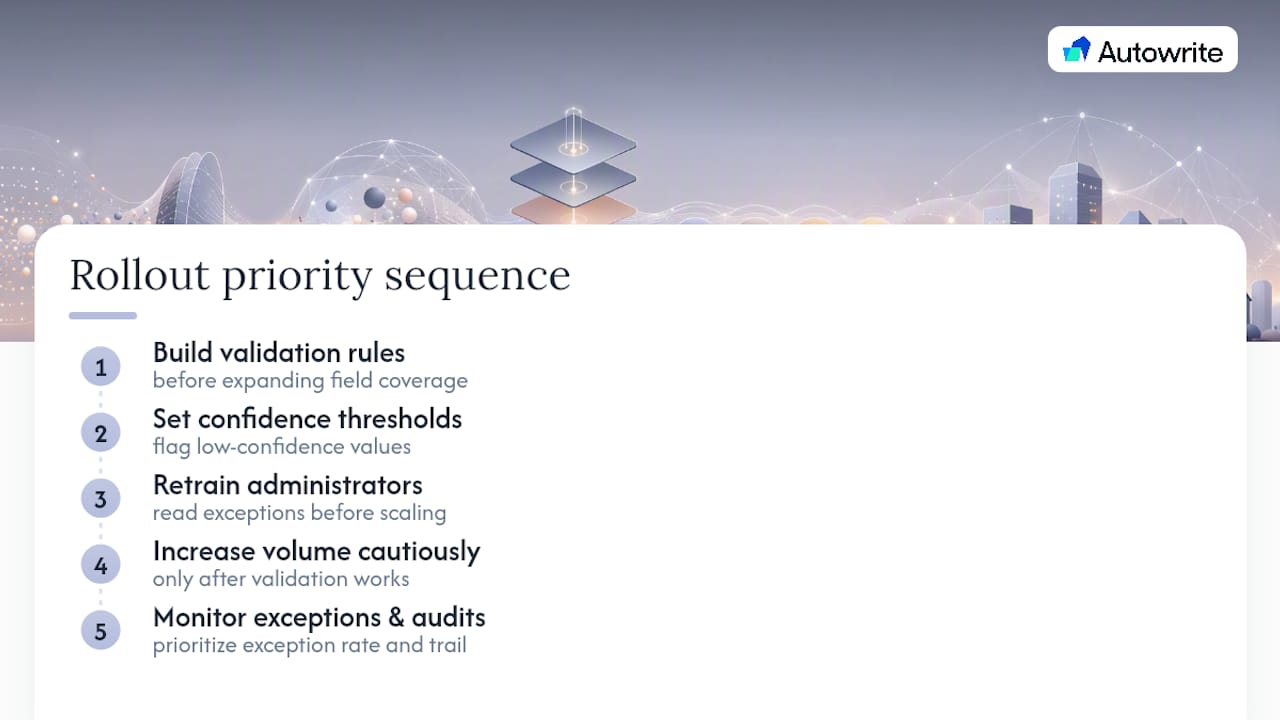
Prioritize the boring work first: build your validation rules and confidence thresholds before you expand field coverage, and retrain your administrators to read exceptions before you hand them a larger volume. MPA's coverage on where AI creates real leverage for brokers points toward using parsed data for renewal and refinance outreach, which only works if the underlying extraction was trustworthy in the first place. Get that foundation right, and everything downstream, from pipeline scoring to faster closings, follows naturally.
— Anant Bawa
Autowrite Handles Parsing, Validation, and LOS Sync in One Pass
Running a pilot with spreadsheets and a manual review checklist works, but it's slow to scale past a handful of files; consider leveraging tools like the AI Document Analyzer to accelerate document analysis at scale. There are platforms built specifically for the workflow described above: parsing credit reports into structured fields, applying validation rules, routing low-confidence values to an exception queue, and writing verified data back into your LOS with an audit trail intact.
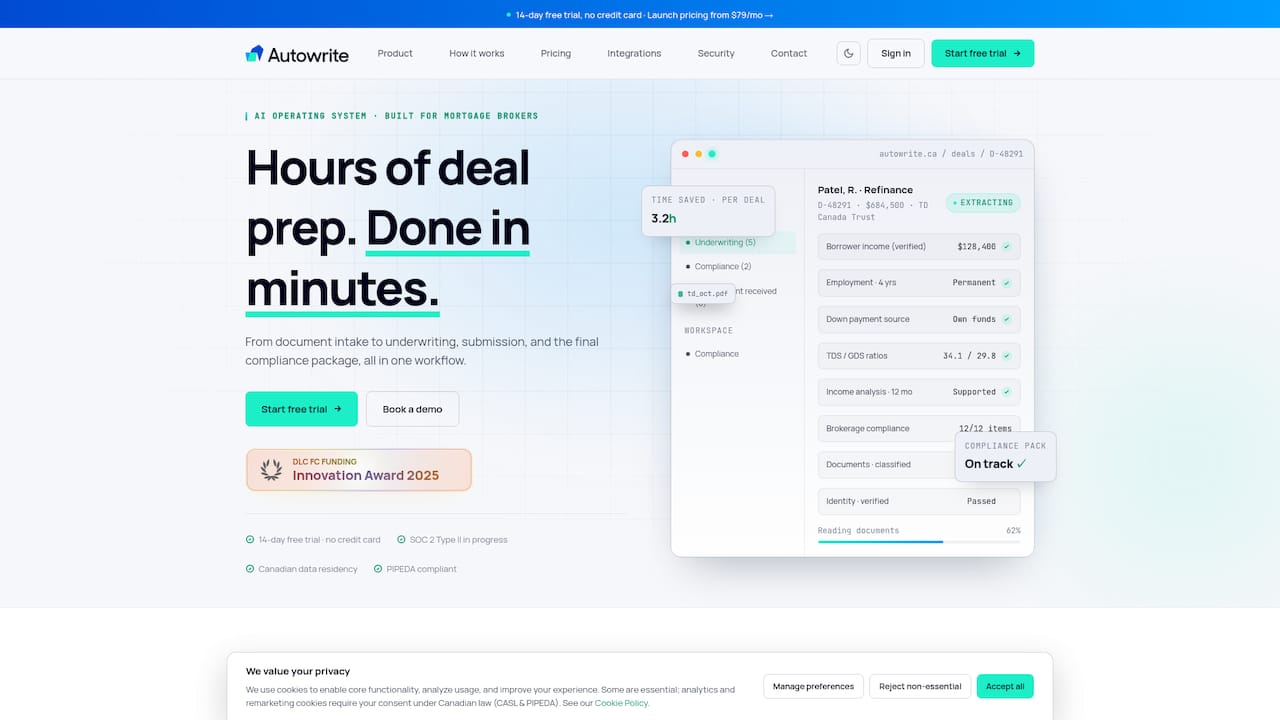
Some platforms handle document classification and extraction across the full mortgage file, not credit reports alone, so validation and audit logging can apply whether processing income documents, appraisals, or tri-merge reports. These solutions may be designed with compliance and data residency considerations in mind.
If the pilot checklist above sounds like the right next move, start there. Try Autowrite with a trial run on a small batch of files and see how the exception rate and time-per-file numbers compare to your current process before committing to a full rollout.
This article is general information, not a substitute for advice from a qualified financial advisor. Consult a qualified financial professional about your own circumstances before acting on anything here.
Sources
- AI-powered mortgage processing for Canadian lenders & brokers | Scale AI (project listing)
- AI is coming for brokers' back office — some will adapt, many will not | MPA — 2026-03-17
- 7 Steps to mortgage data entry automation in 2026 | US Tech Automations
FAQ
What Fields Does Credit Report Parsing Extract?
A complete parse returns borrower identity, report date, credit score with scoring model, full tradeline arrays with payment history, inquiries, and public records, typically formatted as JSON or normalized tables ready for LOS import.
How Accurate Is Automated Credit Report Extraction?
Accuracy varies by field type and bureau formatting; high-confidence fields like credit scores tend to extract cleanly, while dense tradeline tables and payment history grids need validation checks and confidence thresholds to catch table stitching errors.
Can Parsed Data Write Directly Into My LOS?
It can, but write-back should route through a validation and staging layer first, not directly into disclosures, so mismatches get caught before they propagate into a live loan file.
What KPIs Should a Pilot Track?
Track field-level accuracy, exception rate, time saved per file, and LOS write-back success rate across at least 20 to 30 representative files before expanding coverage.
Does Autowrite Handle Credit Report Parsing and Validation?
Yes. Autowrite parses credit reports into structured fields, applies validation rules with an exception queue, and syncs verified data into your LOS while maintaining an audit trail for compliance review.